
Heuristic Evaluation & UX Strategy for a local Dating App
Evaluate the app experience for adults using “The Round” to date
📌 PROJECT SCOPE
Client: The Round
Timeframe: 5 weeks (part-time)
My Role: UX Researcher, UX Strategist
Methods: Heuristic Evaluation, RITE Usability testing, Messaging Audit
Tools: Notion, Figma
Project Overview
🚀 CLIENT KICKOFF
The Round offered a new dating experience where individuals met their match on a date within 48 hours. The Round was seeking an evaluation of their current app and insight on the biggest issues.
🔎 OBJECTIVES
Evaluate current app
Highlight common user pain points
Provide scrappy, UX recommendations feasibly implemented by a startup of 3 teammates
✏️ NOTES
This project was completed in exchange for course credits as an independent study.
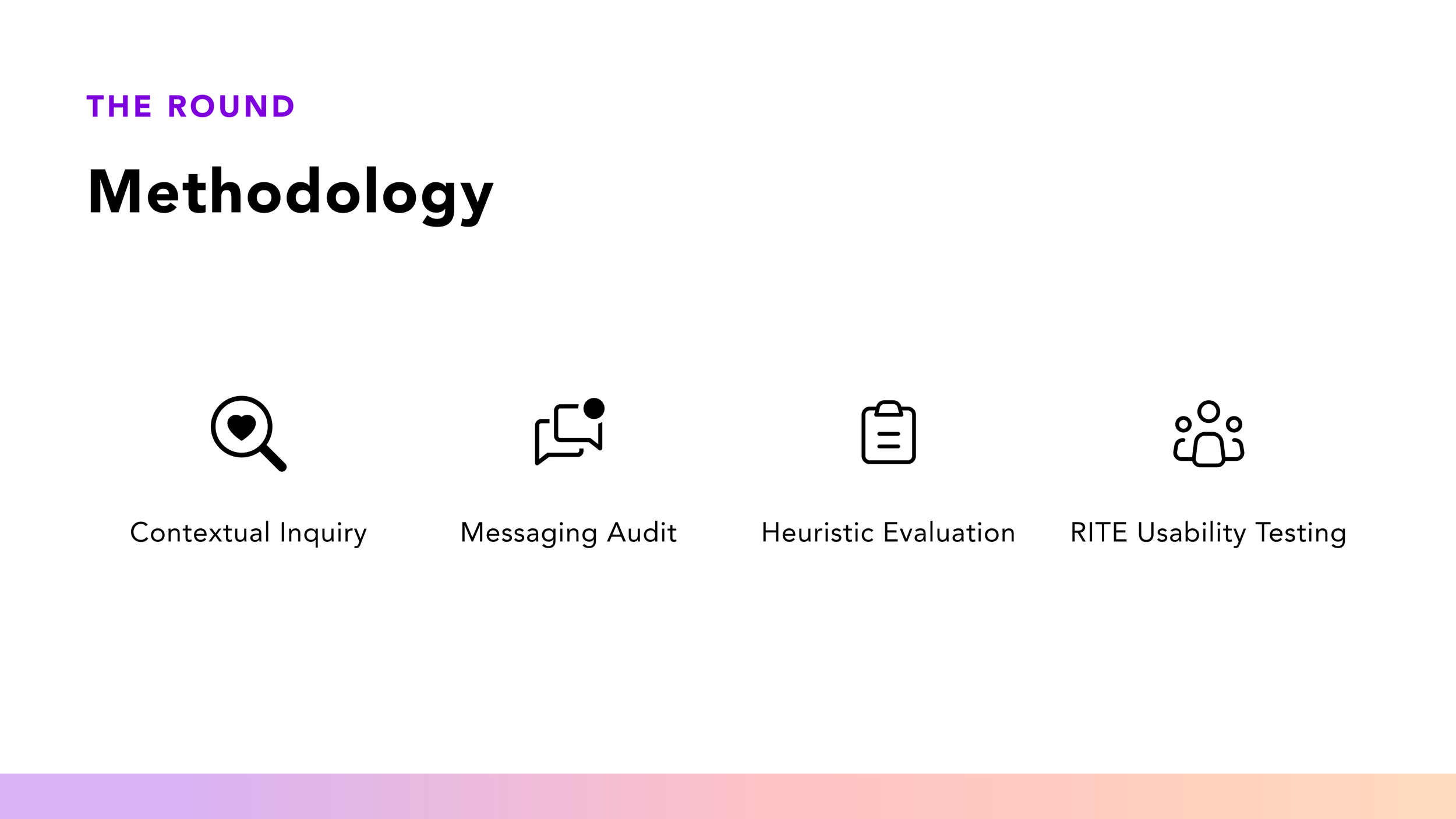
Methodology
Heuristic Evaluations: Onboarding & Matching
RITE Usability Testing
Messaging Audit
📋 Heuristic Evaluation
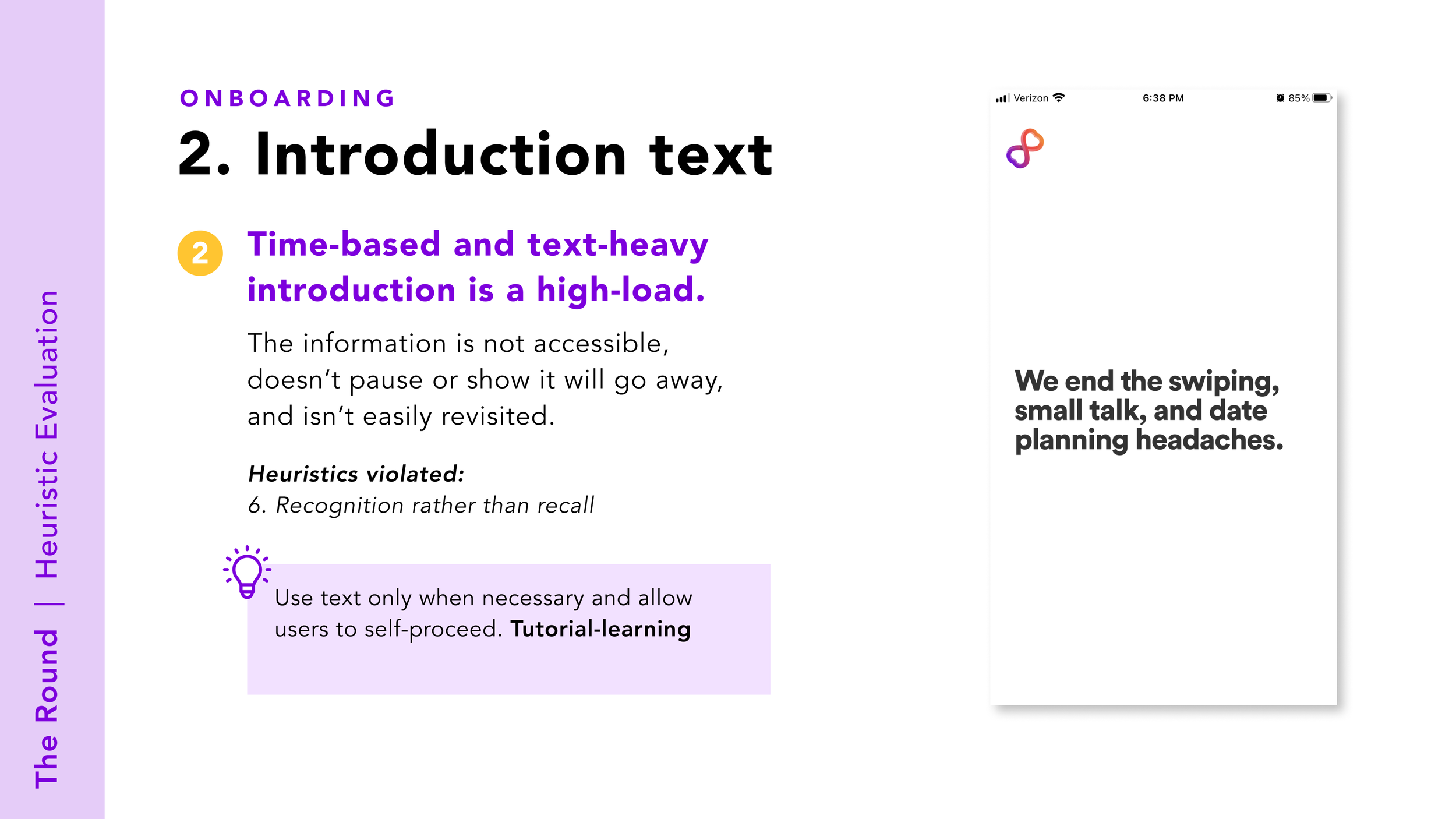
I split the heuristic evaluation into onboarding and matching because the user is in two different contexts for these flows which should be taken into consideration.
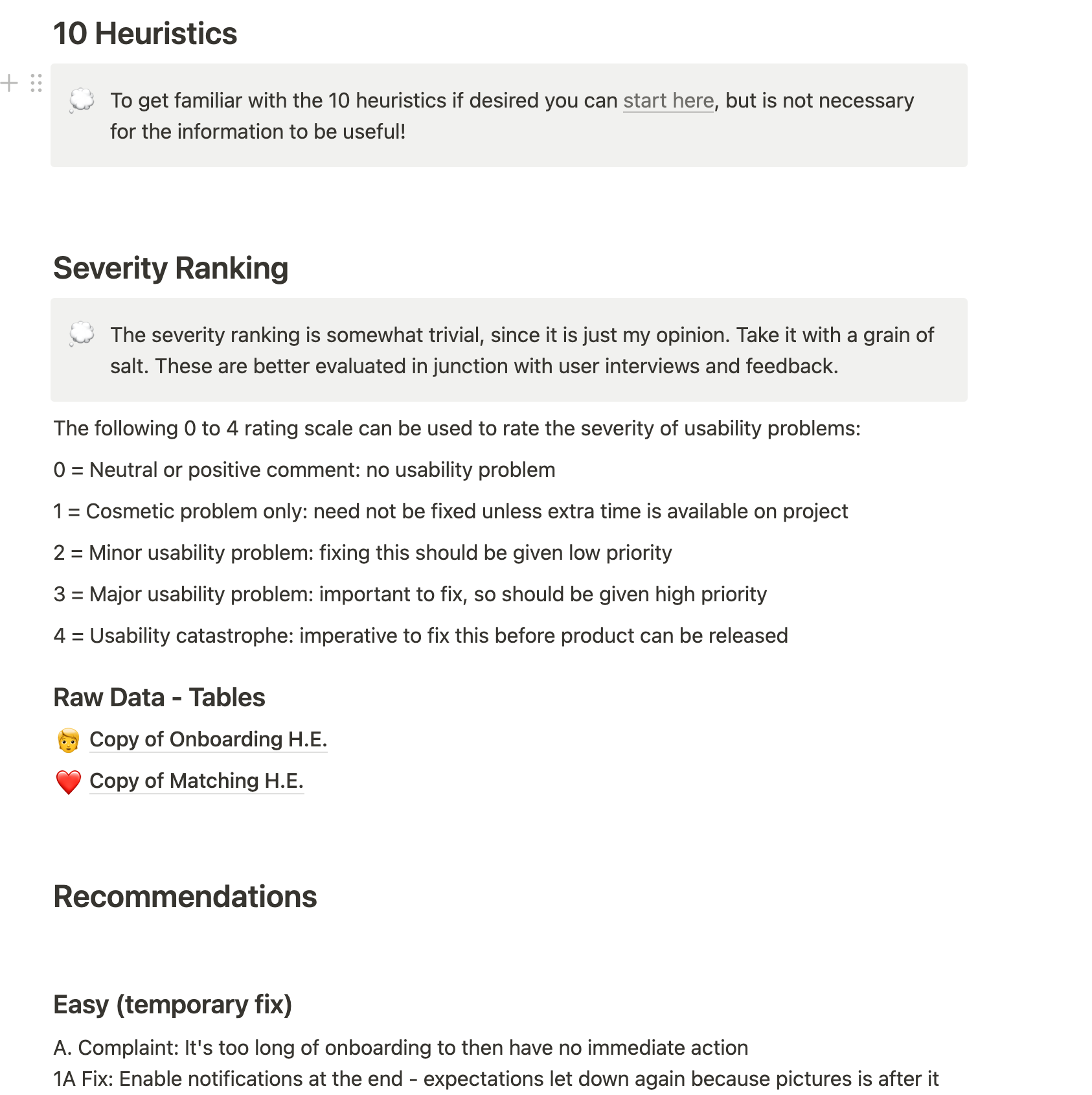
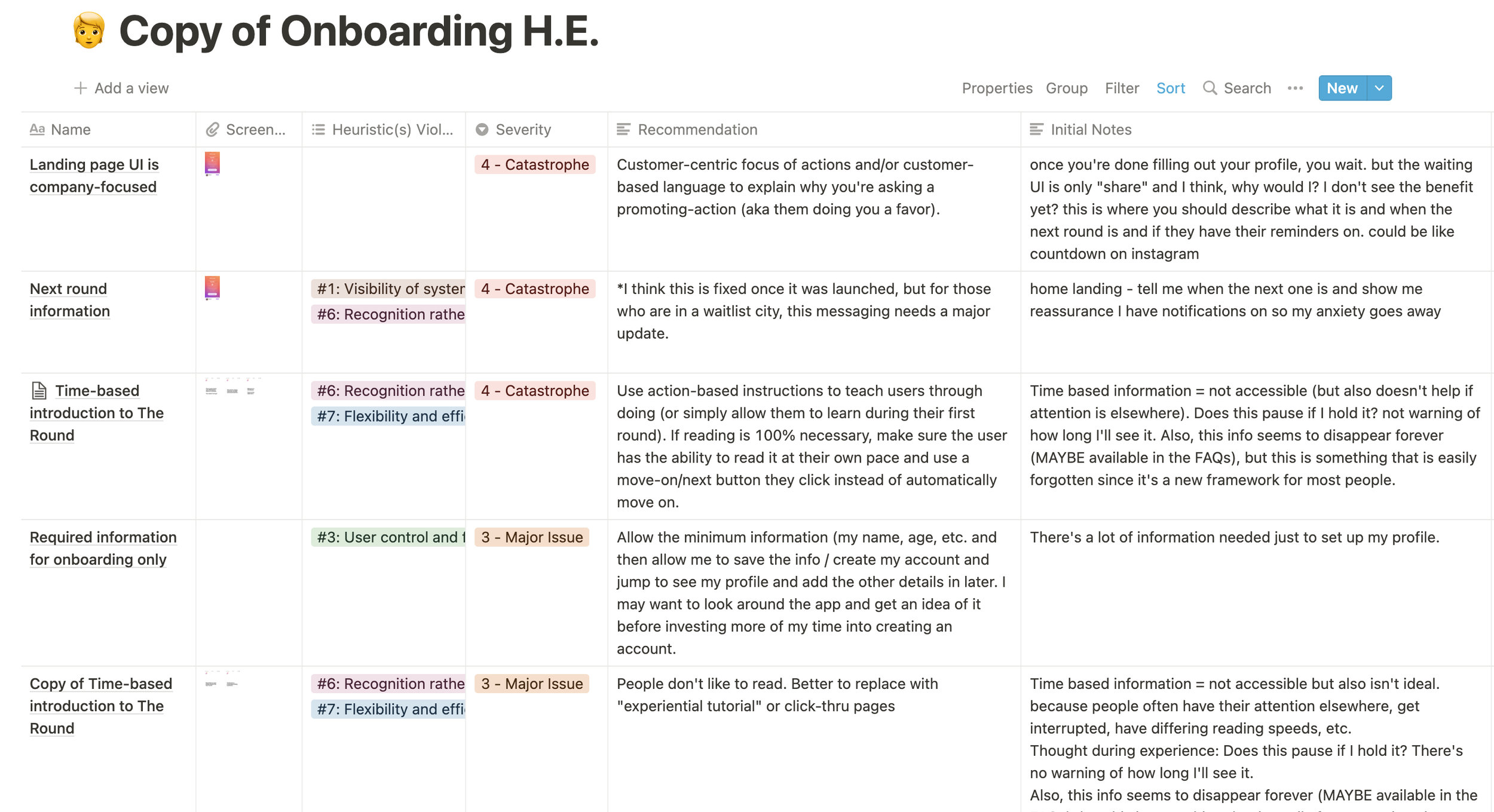
I used Notion to sort and share the findings with the founders which included a screenshot of the screen I referenced, the heuristic violated, my severity ranking, recommendation, and initial (unfiltered) notes.
With a limited team, prioritizing what would have the most impact was incredibly important.
🏃 RITE Usability Testing
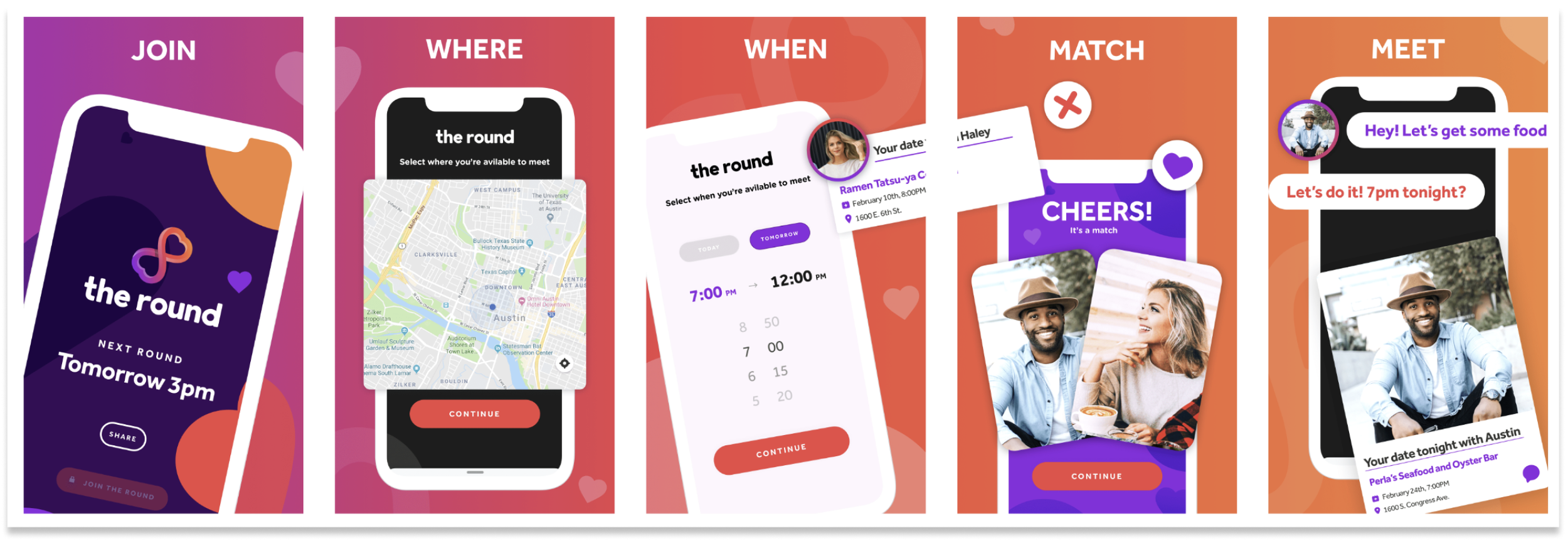
The Round had a novel concept: each day you could put in your availability for the next two days, join a live match-making session, and if time and profile likes matched you would get a pre-planned date and meet your match (in person or virtually) at the scheduled time.
This novel concept was what differentiated The Round from other dating apps, but it could be hard for users to grasp the concept initially.
With their app’s success dependent on the network of users recruited and participating, I wanted to focus the research not only on the usability of the matchmaking process but also include concept testing.
For the discovery research, I wanted to understand what users expected from the app based on the current messaging, what they didn’t understand about it, and what pain points they had that weren’t met with other dating apps.
Recruitment
Participants were recruited from my personal network so a sampling bias is present. I selected participants with varying dating app usage.
The Round was also working under a tight timeline so we opted for RITE Usability testing which allowed for design changes to be implemented in between sessions.
Research Plan
I broke the interviews into 3 stages: Prior to use, after onboarding, after matchmaking
1. Prior to app use + landing page (waitlist)
What did users think “The Round” would be like?
How did they interpret The Round’s marketing messages?
Did users understand the concept of the waitlist and the app launching in limited cities?
2. Onboarding: Usability of the onboarding process + perception of app after onboarding
Based on the steps given in the onboarding process and before starting “a round” what did users expect to happen?
What usability issues arose in the onboarding process
For dating app users, was there anything unexpected or difficult in comparison to other apps sign-up process?
3. Matchmaking: Usability of the matchmaking process + perception of app after matchmaking
After completing “a round” what changed or stayed the same about their perception of the app?
What usability issues arose in the matchmaking process
For dating app users, was there anything unexpected or difficult in comparison to other apps matching process?
📊 Data Synthesis
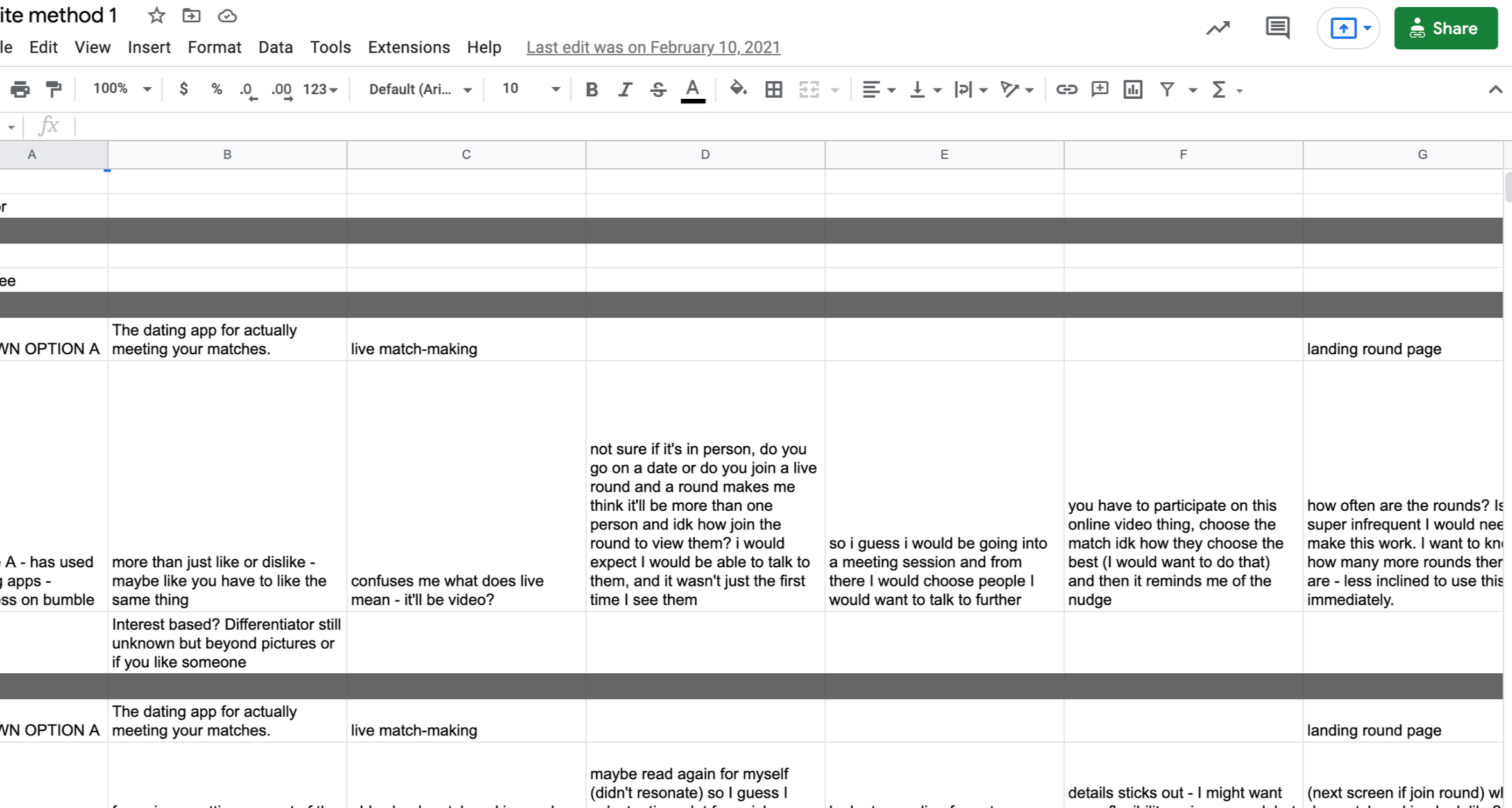
I took findings documented in google sheets during sessions and translated them into clear, prioritized recommendations for the founders.
Messaging
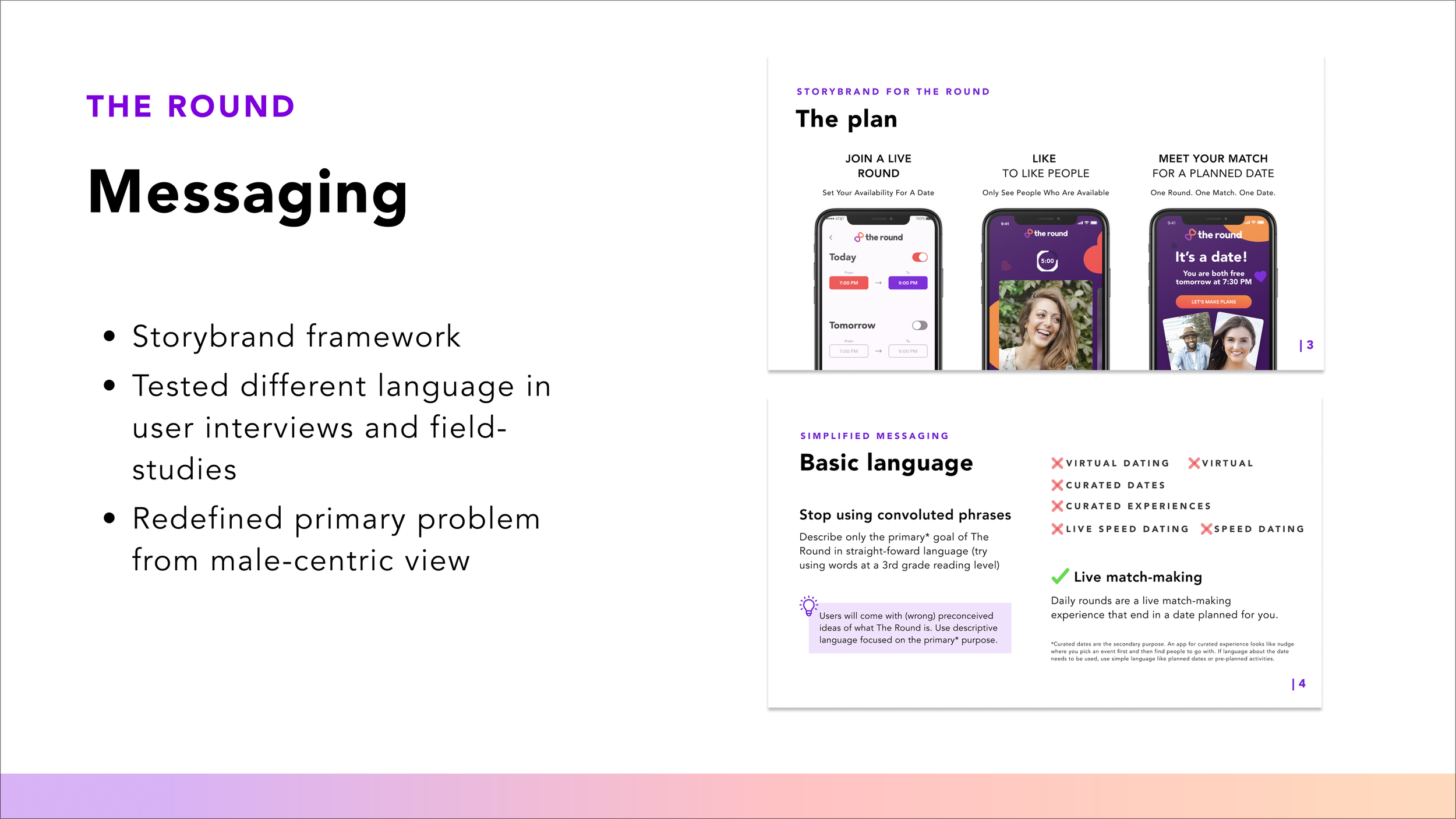
There was initial confusion around the app which could keep users from downloading and discovering how it works. Truly understanding the pain points of the user and marketing to that would help motivate them to download the app without fully understanding it. I had brought up concerns when doing a messaging audit that it was very company-focused marketing language and didn’t address pain points I would have as a female dating app user. This was validated through user interviews and that motivated the founders to reconsider their selling point.
Initial Use
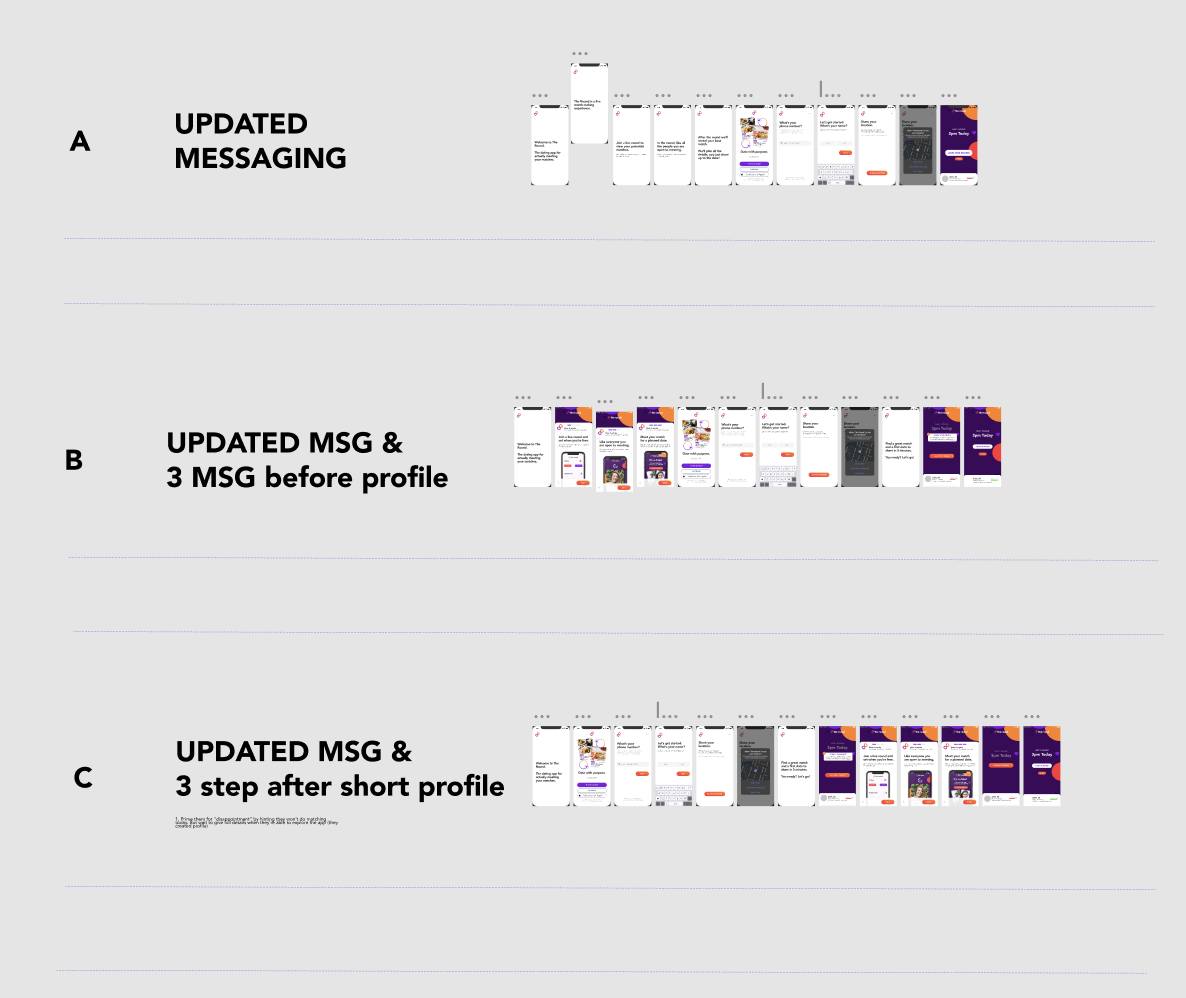
Users also expressed being nervous using it the first time because they didn’t understand what to expect. They were committing to a time and date before understanding how the app worked and the implications of their choices were unclear. This was a huge issue to focus on because if users never tried the app, they wouldn’t see the value in it. I spoke about tutorials and walk-throughs but mentioned how many users skip the helper demos. The founders were the ones who came up with the idea of matching with a “concierge” for the mock round.
The great part about the walk-through and concierge was creating a match where the founders now had direct feedback from their users. If users had questions, they would ask the concierge. They would be able to solve for frequently asked questions and continue to iterate on their product to help it scale.
Research Findings
The findings had an immediate impact:
Updated messaging to also address the female user’s pain point
Introduced a walk-through tutorial prior to participating in a real round to get users acquainted with the process
Introduced a “concierge” match that users could ask their questions to (response was sent thru the concierge but the response was directly from the founders answering themselves)
Feedback from the CTO: “Mia was extremely thoughtful and empathic in her UX research for The Round. She went out of her way to deeply understand our users and their problems, and delivered her insights clearly and elegantly. I hope to work together again in the future!”
💭 Reflection
Industry Takeaways
Founders will inevitably bring in their own bias and have strong attachments to the product they’ve developed. This helped me develop effective storytelling and relying on interview data as evidence for convincing the skeptical.
Personal Takeaways
The last startup I worked on was my own, so it was exciting to be back in a scrappy environment where my impact was broader than at traditional companies. I enjoyed the problem space and would be interested in working in the field of dating solutions.