
Cross-platform redesign for Tennis Channel Streaming App
Redesign the app experience for tennis fans watching Tennis Channel Plus
📌 PROJECT SCOPE
Client: The Tennis Channel
Timeframe: 7 months
My Role: UX Researcher
Methods: Generative Research, RITE Usability testing, User Acceptance Testing, Benchmark study
Tools: Figma, Jira, Miro
Project Overview
🚀 CLIENT KICKOFF
Tennis Channel wanted to revamp its streaming platform, Tennis Channel Plus (TC+) and looked to Sinclair Digital in order to understand their users and create an experience that met users’ needs.
🔎 OBJECTIVES
Decide how we can provide an elevated experience for the pre-watch experience finding content users want to watch.
Understand the Tennis Channel Plus customer and current experience.
Redesign the experience to align with user’s goals and watch behaviors.
✏️ NOTES
Tennis Channel is owned by Sinclair Broadcast Group but primarily operates independently.
📋 Methodology
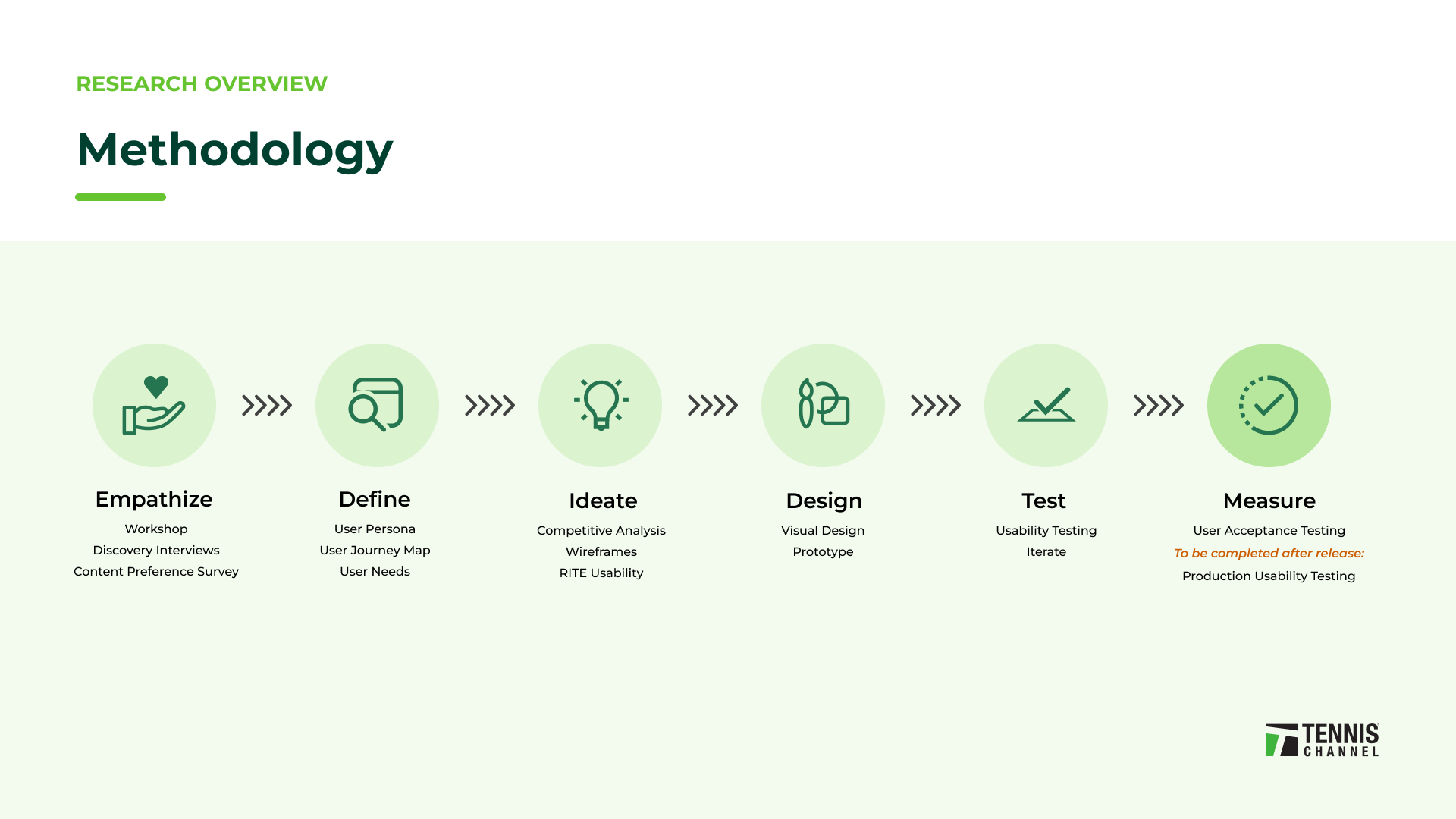
Discovery: In-person Workshop, Generative User Interviews, Survey
Define: Proto-Persona, User Journey Map
Ideate: Competitive Analysis, Wireframes, RITE Usability, Multiple device designs & Prototypes
Test: Usability Testing, Design Iteration
Measure: User Acceptance Testing, Benchmark Usability
🔍 Discovery Research
Workshop
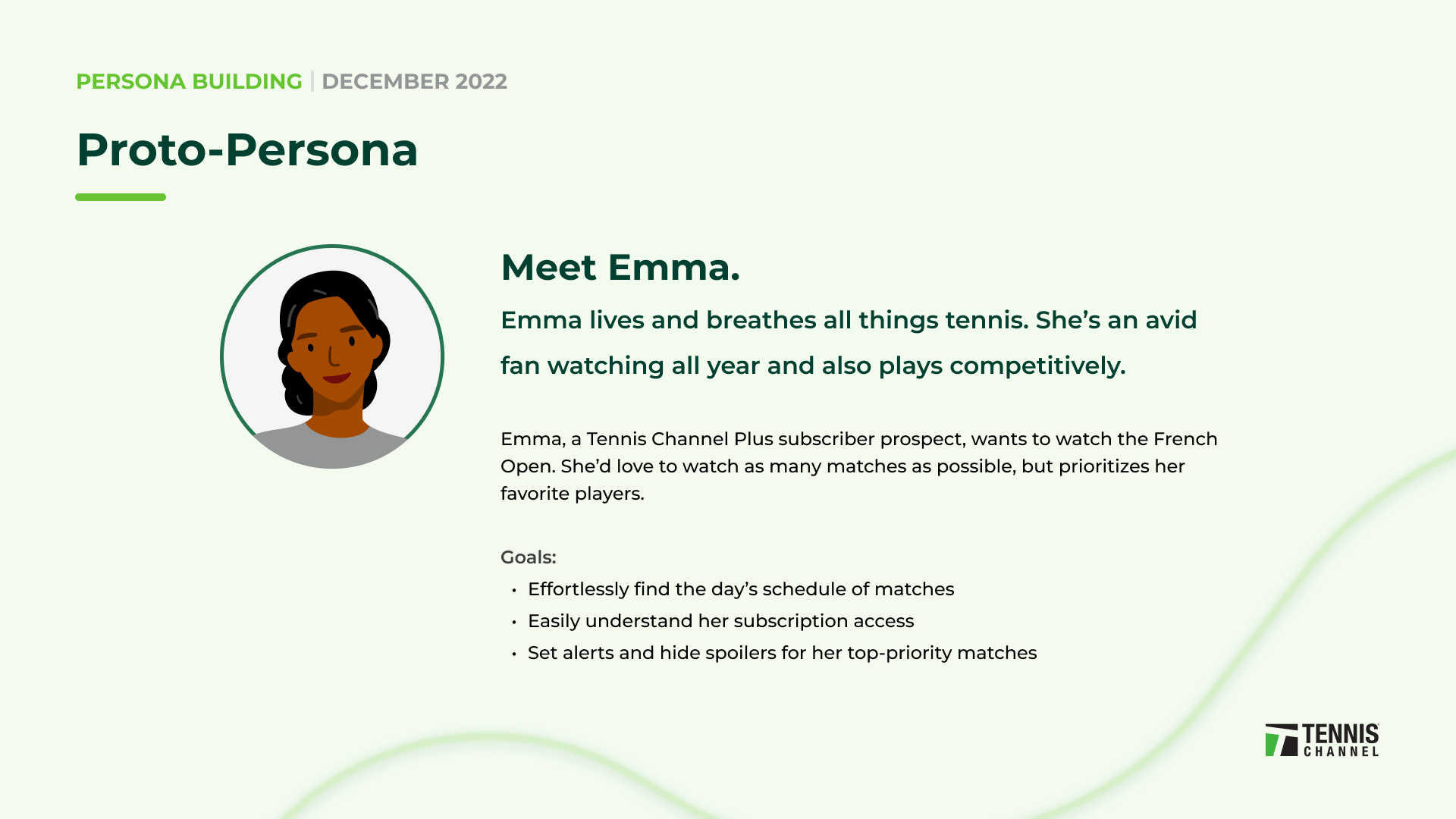
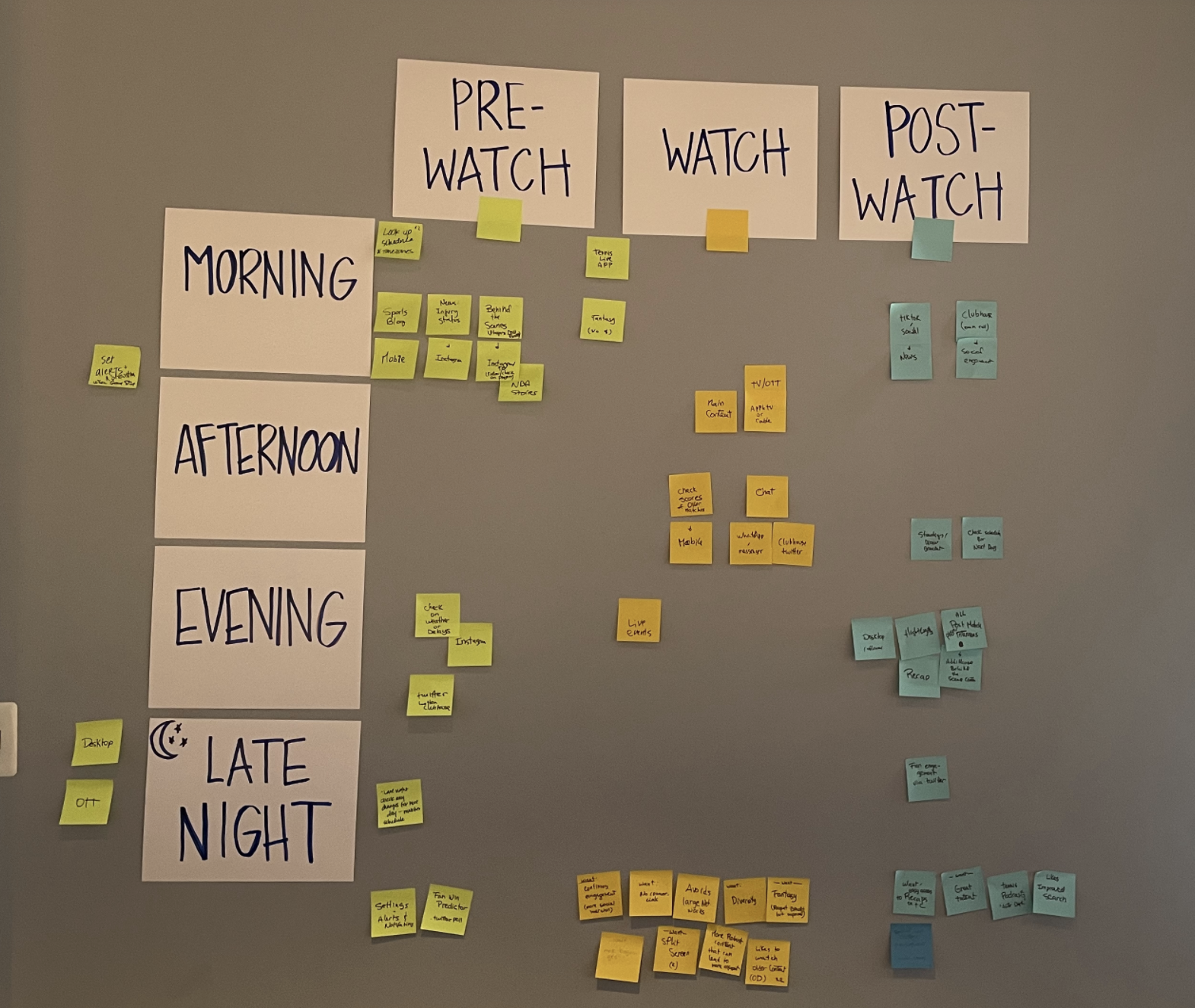
The Sinclair Digital team conducted an in-person customer workshop at the Tennis Channel offices with three Tennis Channel Plus customers. The workshop uncovered many insights as well as led to the development of the TC Proto-persona and Journey Map.
Journey Map
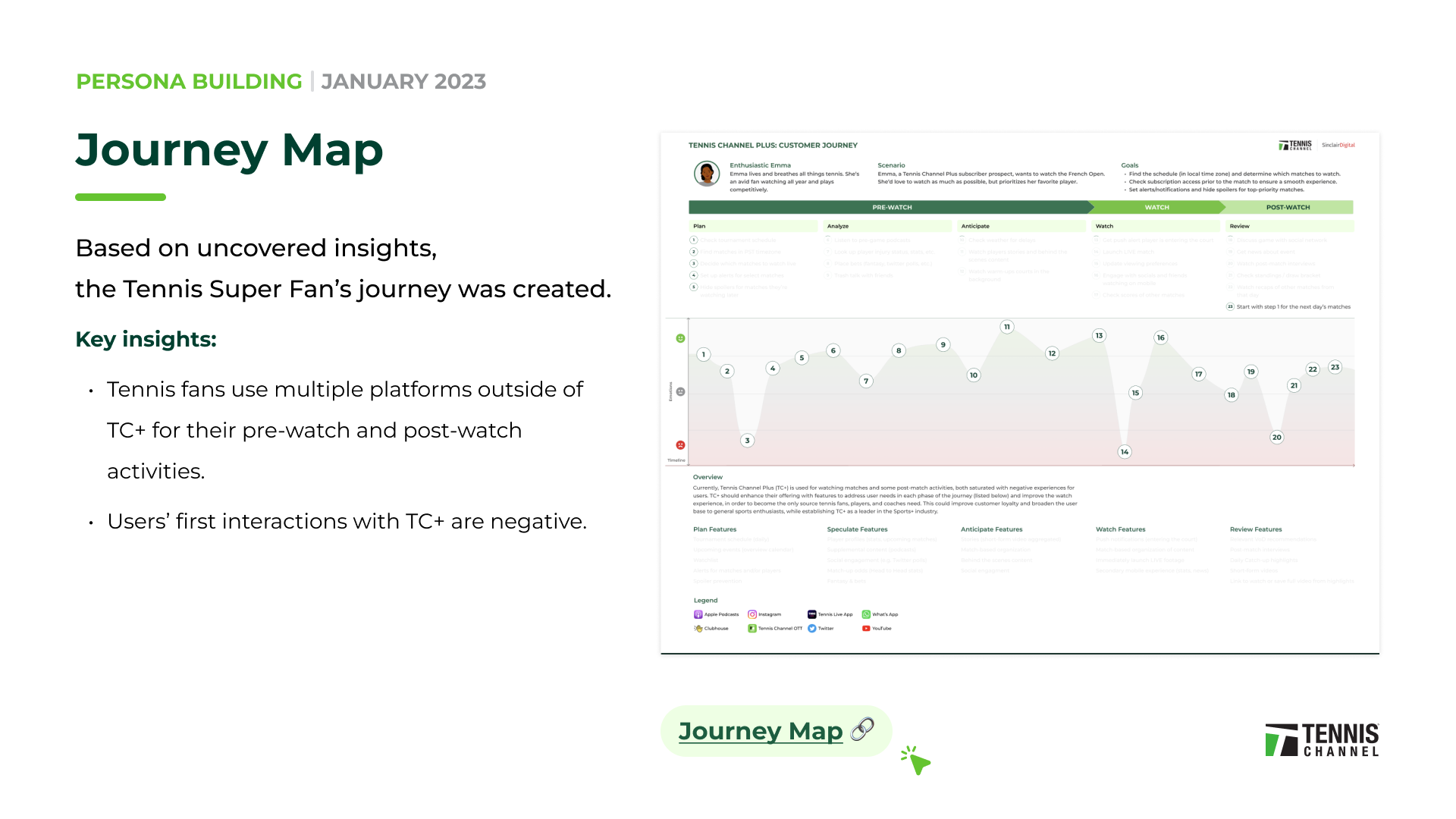
During the workshop, the team uncovered how the Tennis Super Fan’s journey starts well before a match begins.
This uncovered the multiple platforms tennis fan’s use in order to build up to their watch experience.
Through the journey mapping process, the team was able to ideate features for the different stages of the watch experience.
Overall, the journey map highlighted many touch-points TC+ could leverage to better engage with their users and create loyal customers.
Content Preference Survey
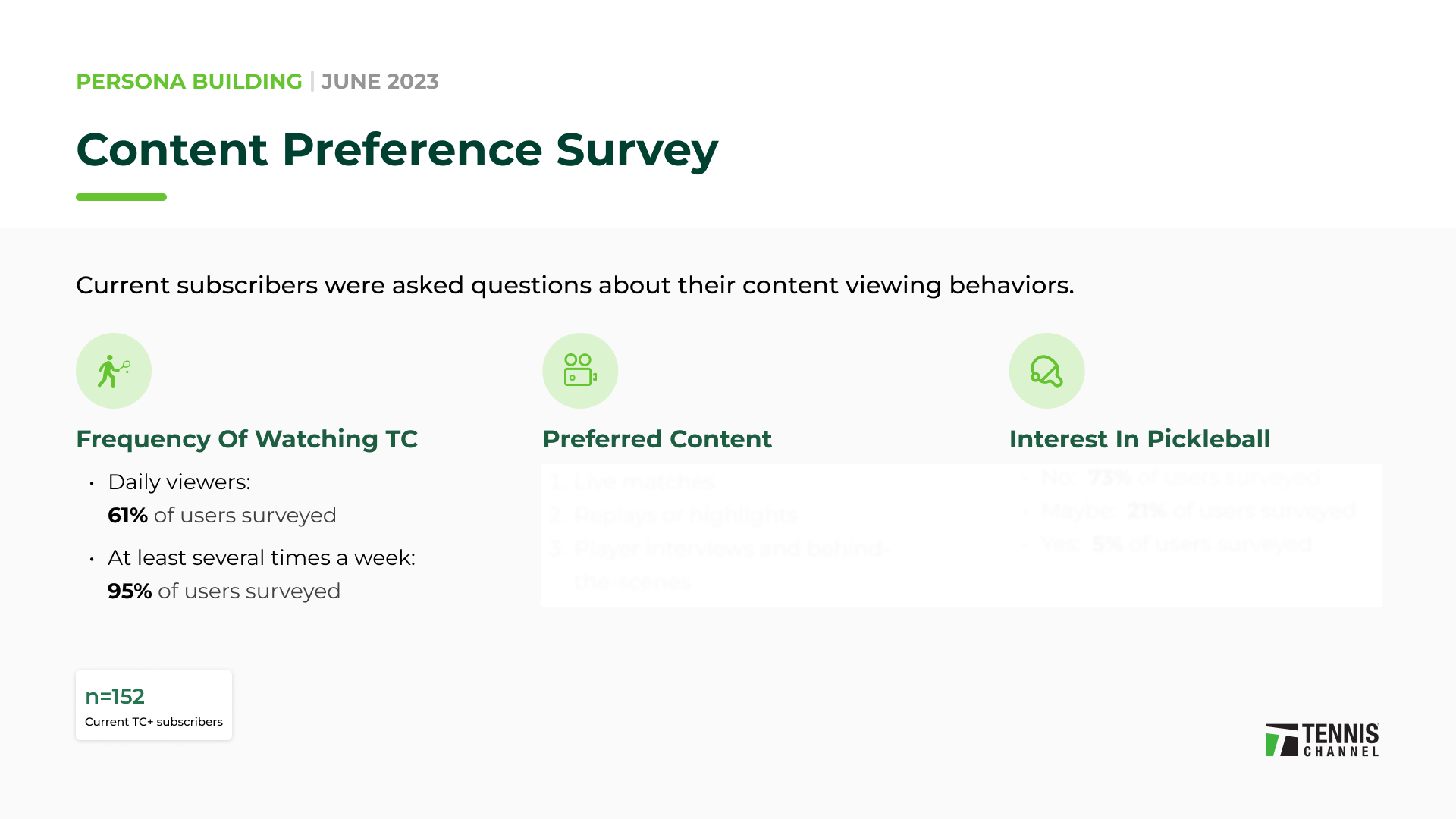
Current subscribers responded to a survey about their content viewing behaviors in order to validate/invalidate what had been uncovered during the workshop.
In addition to their tennis content preferences, subscribers were asked about their interest in Pickleball, to help inform stakeholders on how to incorporate their most recent acquisition of the Professional Pickleball Association.
User Interviews
Generative interviews were conducted with 8 participants to understand their current and desired watch experience.
Throughout this process, I took the lead and mentored a UX designer-turned-researcher on discovery research, participatory design (lo-fi), data synthesis and analysis, as well as presenting to stakeholders.
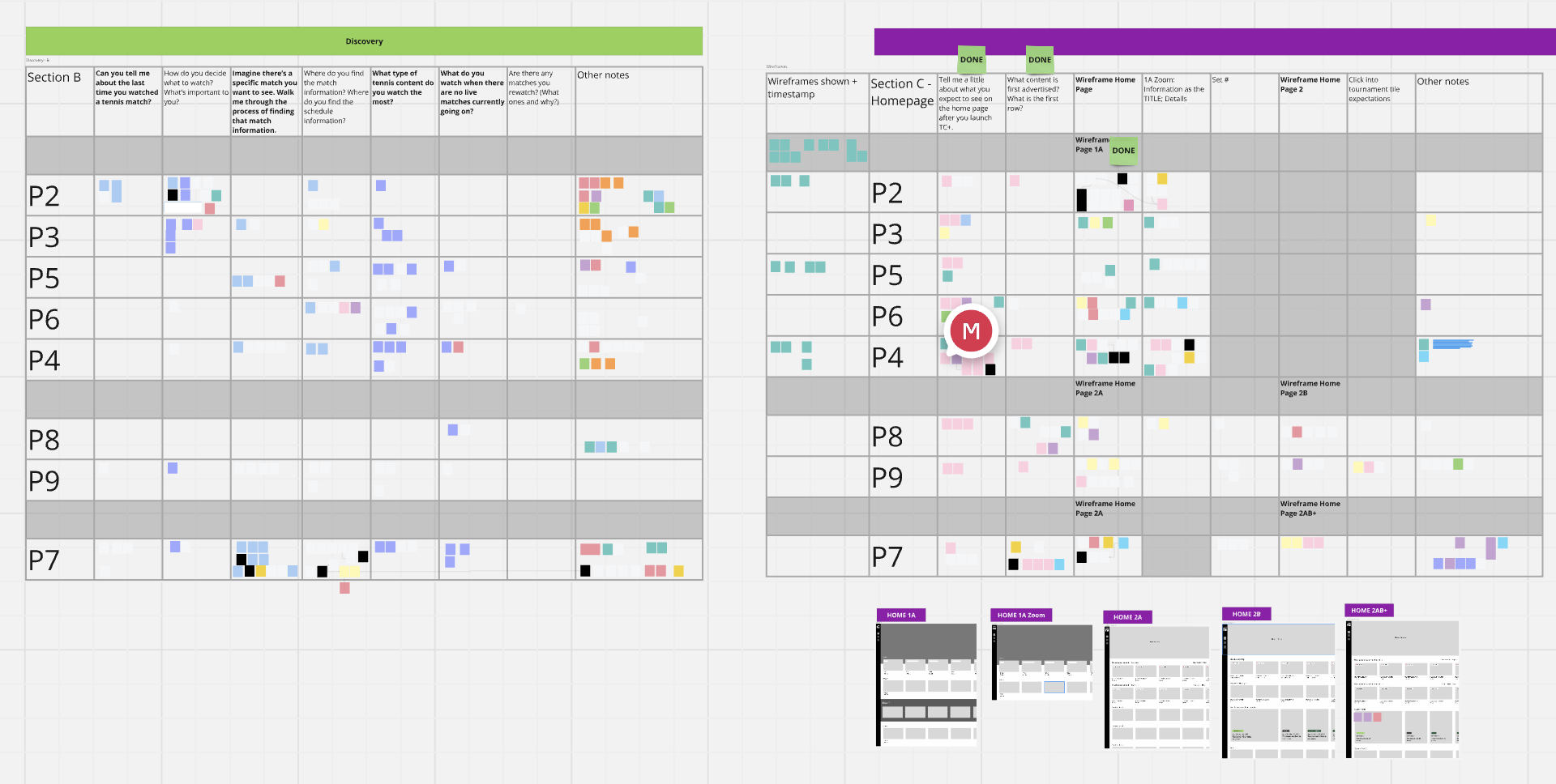
I created the moderator script, note-taking template (excel), and miro document for synthesis. I led the initial sessions until my teammate was comfortable moderating their own. I stepped in when necessary for the research and provided peer feedback to my colleague.
A readout deck highlighted user pain points, feature requests, and input on wireframes.
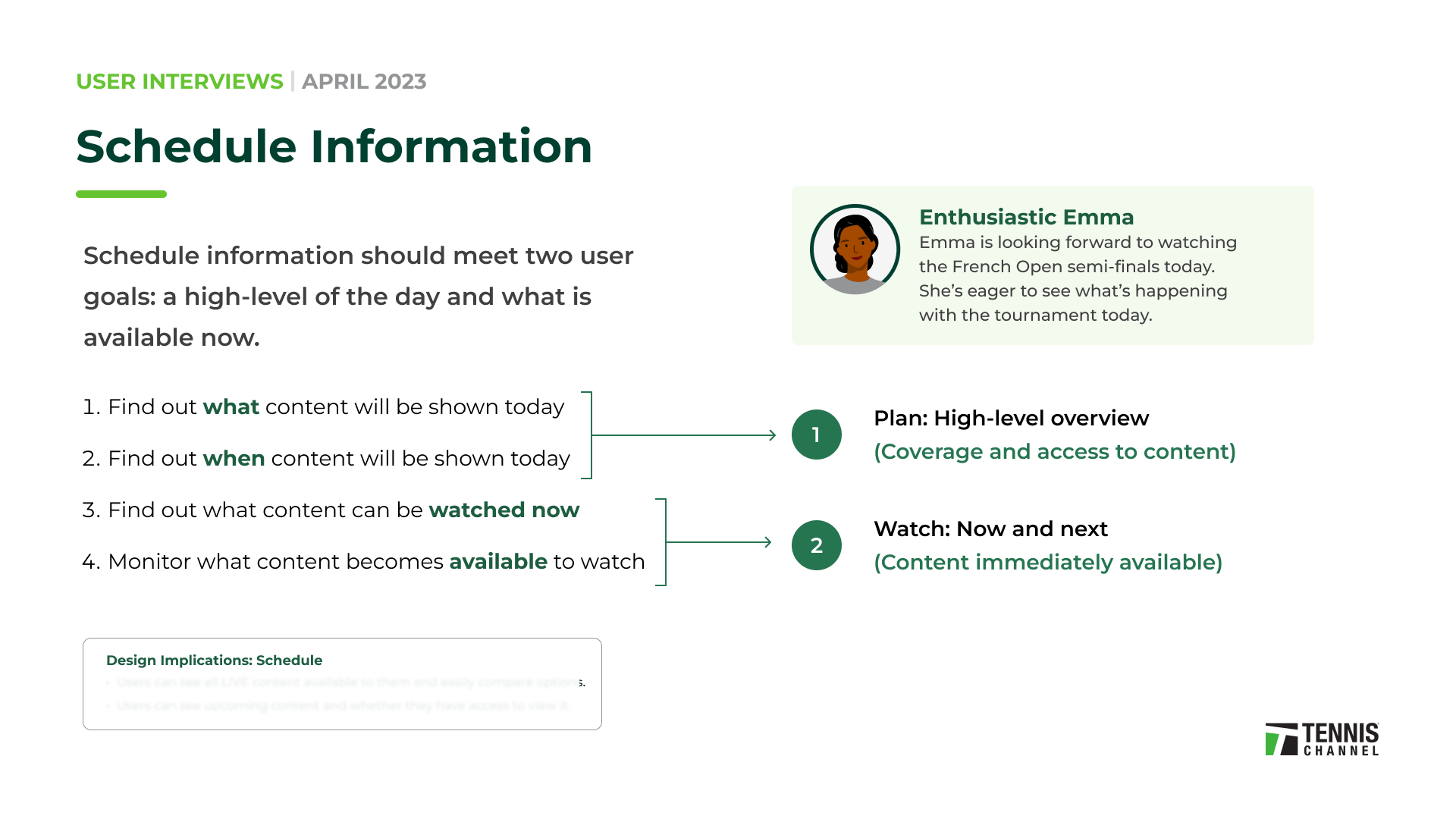
User goals were created with design implications where appropriate to help the designs to stay aligned with user needs.
💡 Design Ideation
Competitive Analysis
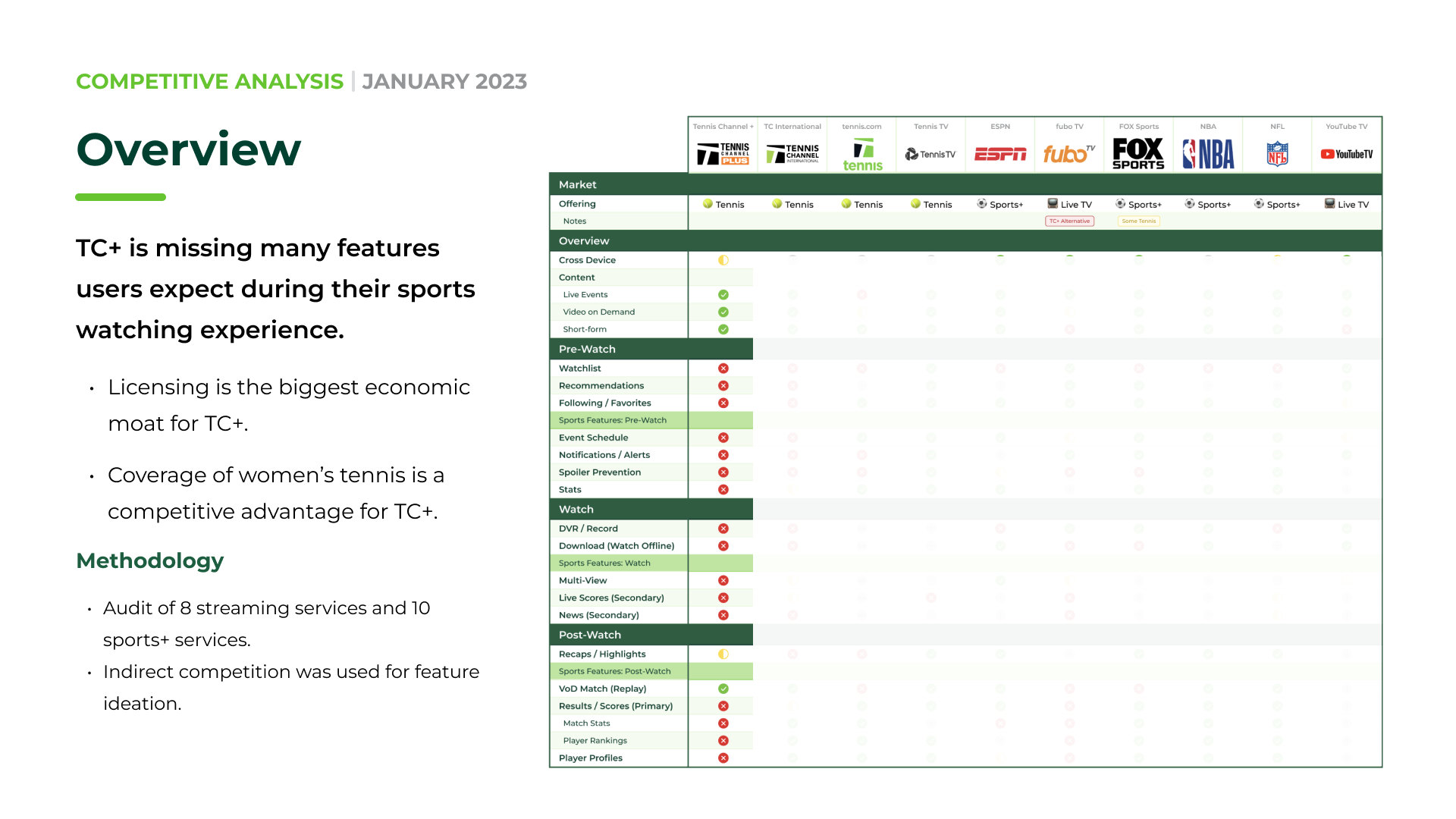
An audit of 8 streaming services and 10 sports+ services was conducted.
The competitive analysis revealed many features available in sports+ services were not a part of the TC+ package.
Indirect competition was used for feature ideation.
A feature comparison was compiled for designers to use as inspiration and to check standard UX patterns used across other platforms.
Experience Principles
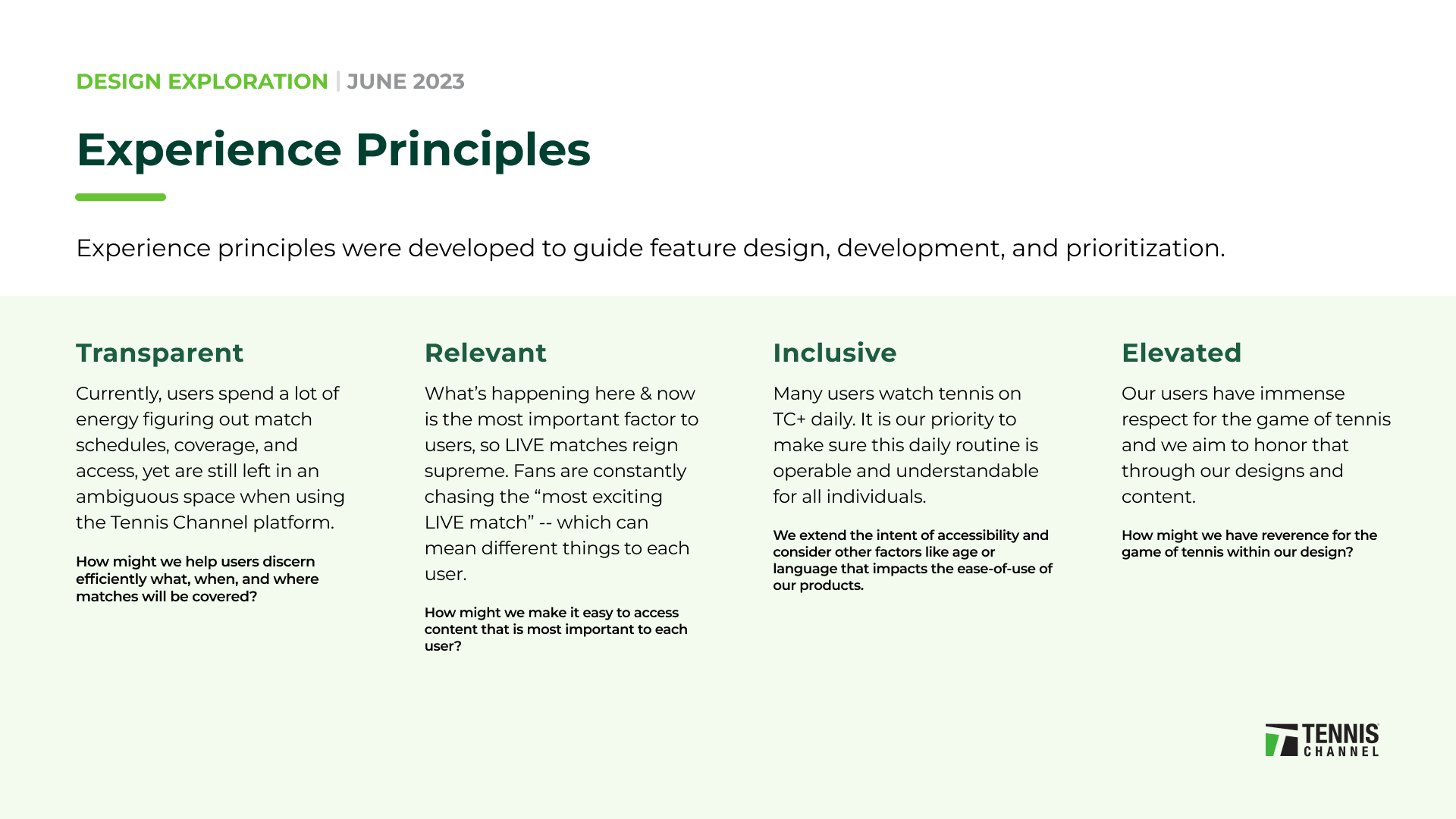
“Experience Principles” were created to guide feature design, prioritization, and ensure the redesign efforts remained consistent with what TC+ users valued.
Utilizing the experience principles, generative research, competitive analysis, and participatory design wireframes, the UX designers created the first mockups for the Tennis Channel streaming platform across multiple devices (TV, desktop, apps).
📊 Design Evaluation
RITE Usability Testing
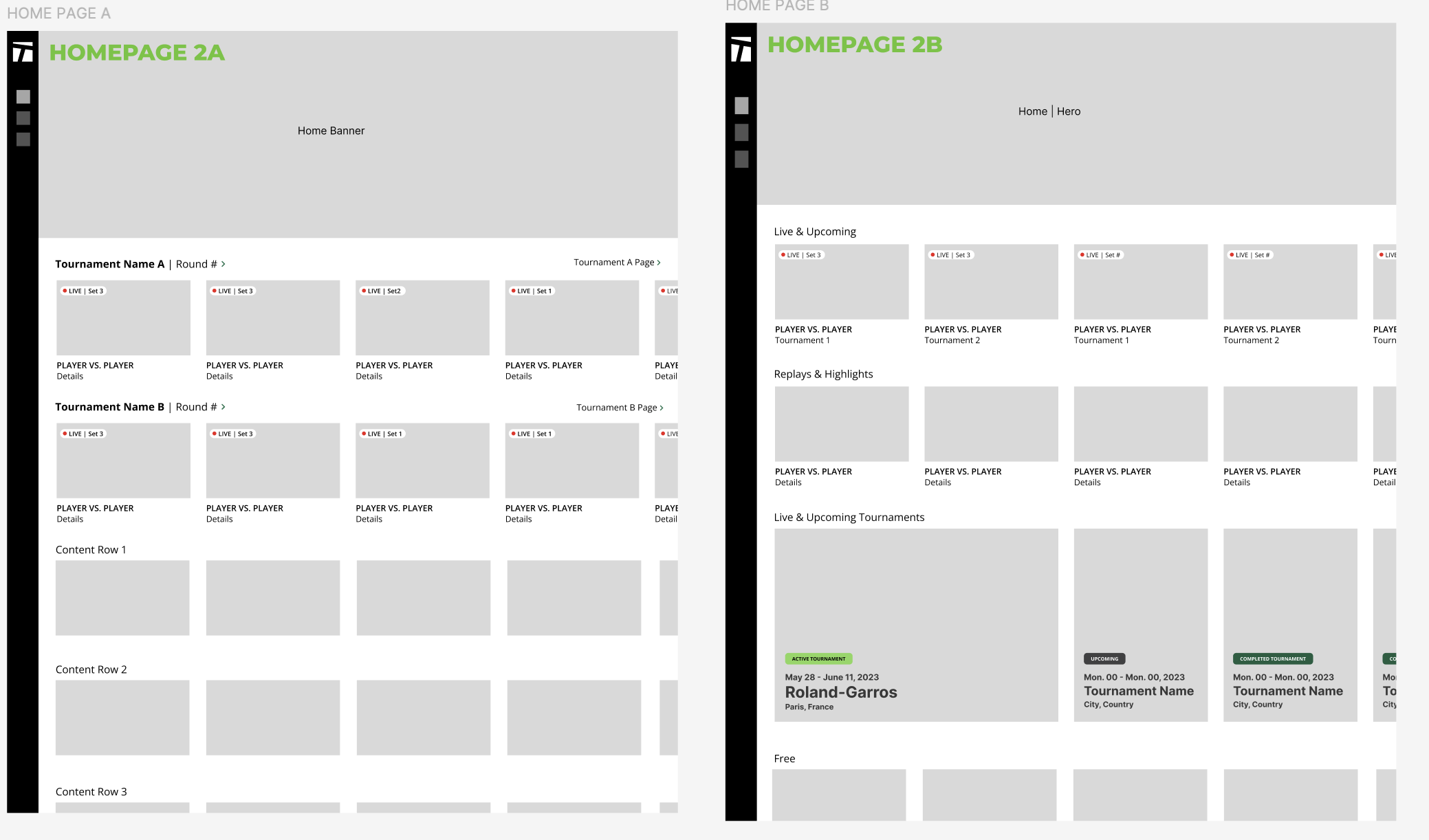
The Rapid Iterative Testing and Evaluation (RITE) method was used for usability testing in order to get feedback from users prior to final designs. This method was extremely effective as tennis is unique from other sports and has many nuances the designs needed to accommodate.
Wireframes were prepared with different variations to show dependent on what users said during the interview. Changes were made between users to test out new concepts brought up by previous users.
User Flows
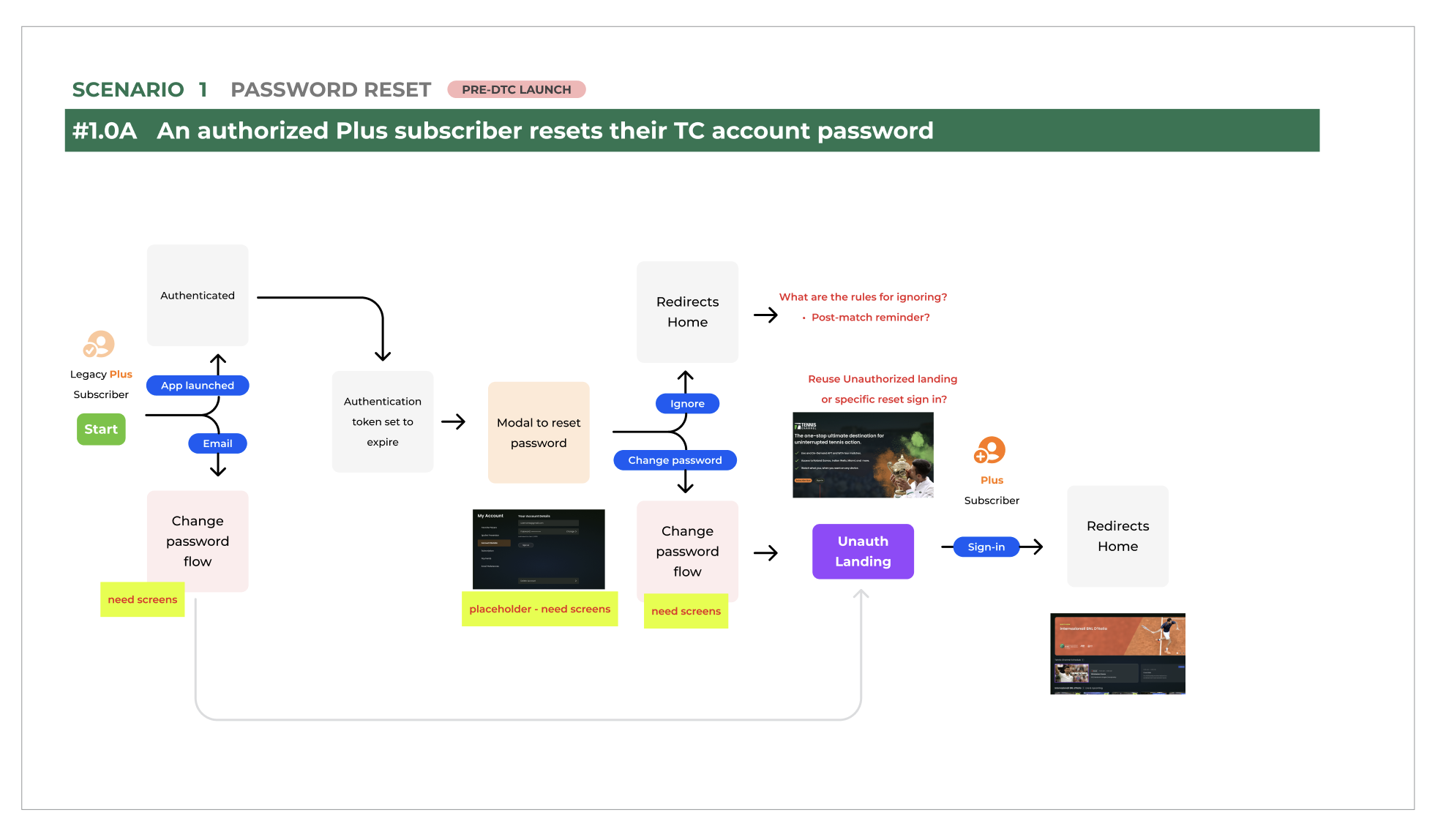
User flows were mapped out for various user scenarios to uncover the necessary screens needed. This activity ensured stakeholder alignment on what actions would appear for users as well as ensuring screens were created for each flow.
User Acceptance Testing
UXR took on the quality assurance role and conducted user acceptance testing across multiple devices and operating systems. I worked directly on the UAT process creation as well as evaluation on multiple devices.
User tasks and acceptance criteria were created for a comprehensive testing protocol.
Requirements entered into the JIRA software.
Test cases were created and detailed steps for UAT testers were listed. Successful and failed results were listed.
Training material was created for individual testers in order to onboard non-QA testers to the process.
Test plans were created comprising of multiple test cases for specific devices and sent to individual testers.
Defects were filed and prioritized and sent to the appropriate team.
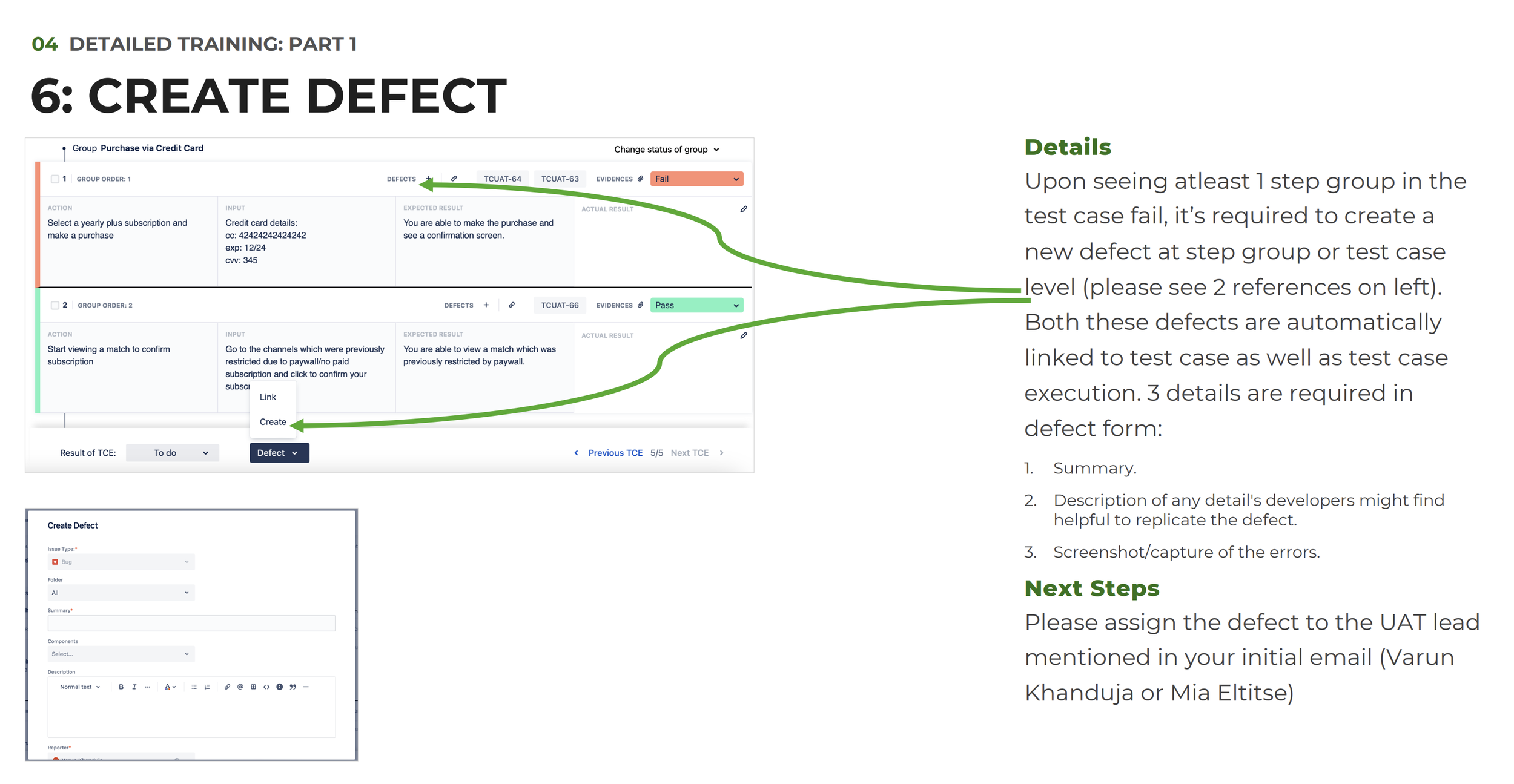
Training material for UAT
Benchmark Usability Study
The UX team wanted to document the usability of the “old” tennis channel platform compared to the “new” redesigned platform.
A fully interactive web prototype was created by the UX designer for the redesigned desktop platform. The live website was used for the “old” platform.
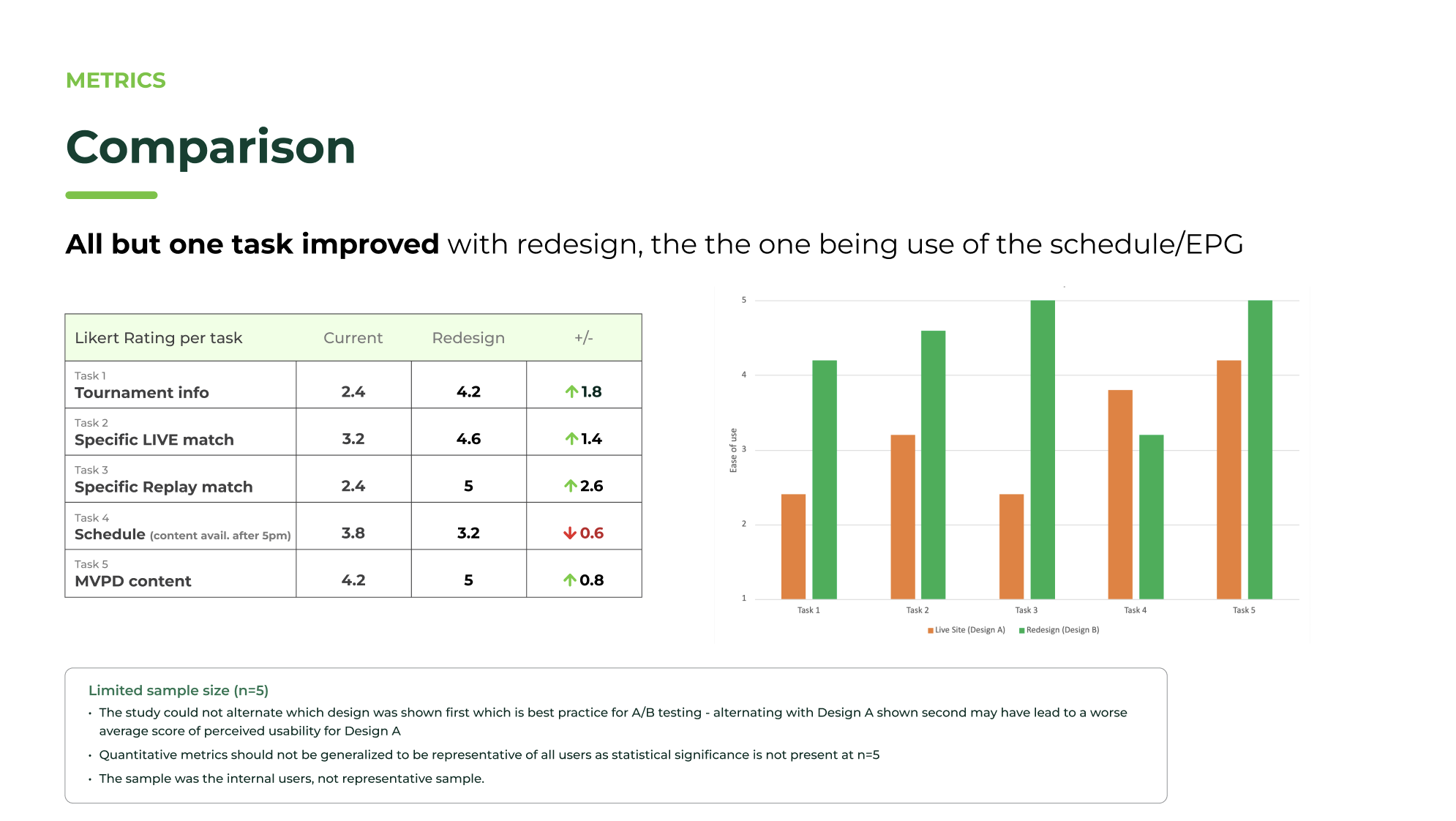
5 tasks were created and tested with 5 users. A 5-pt likert was answered after each task and the 4 question UMUX was answered at the end of the test (in place of SUS).
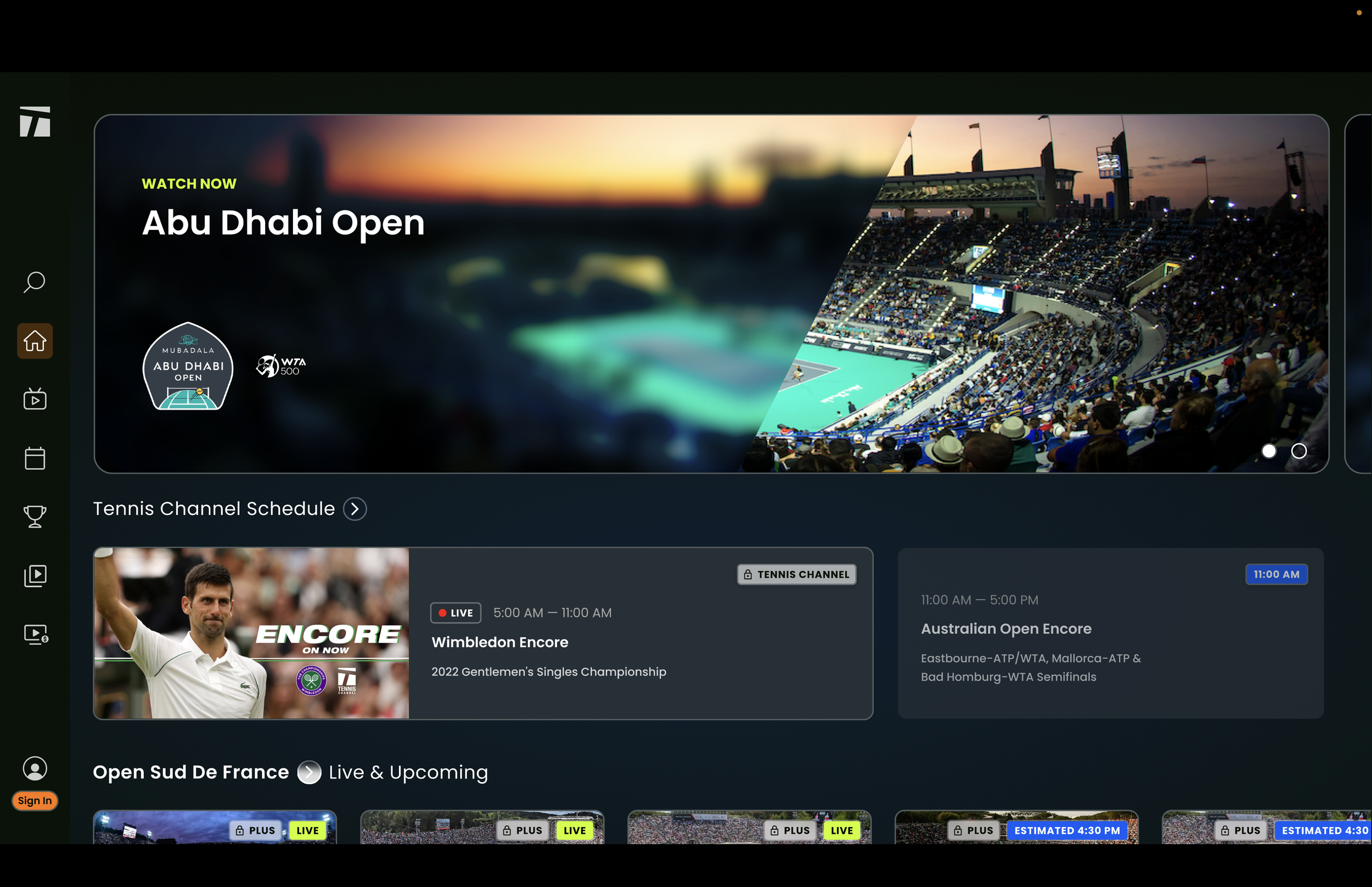
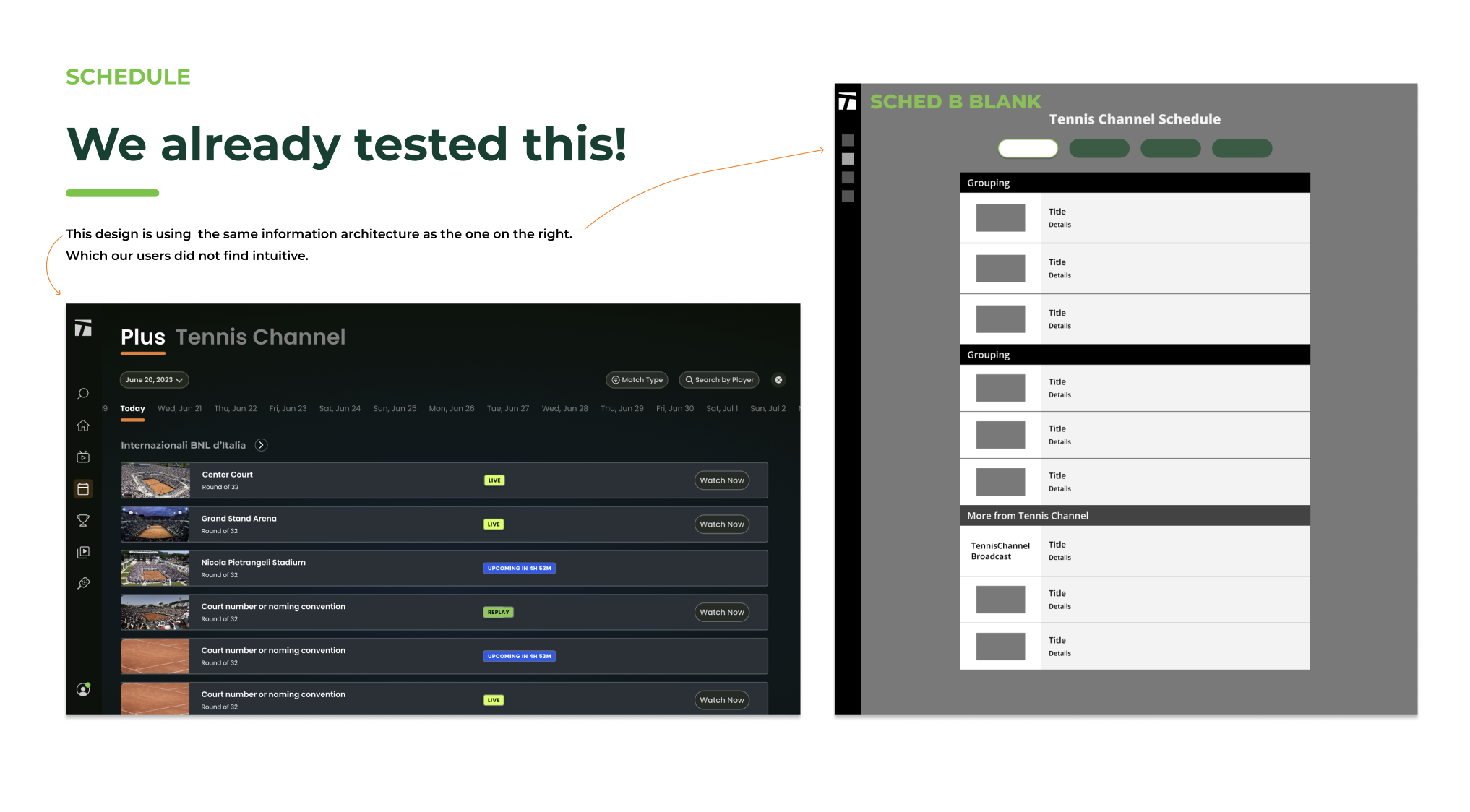
All but one task improved with the redesign. The task that performed worse was anticipated as the implemented designs went against research recommendations in favor of stakeholder’s input and technical ease (out-of-the-box solution favored).
The benchmark study shows the redesigns were an improvement compared to the old designs, with a 25-point increase on the SUS. There are limitations as it was tested on desktop (not OTT/TV or mobile) and with a prototype, but showed promise of the team’s efforts.
Note: Because the development was outsourced to a 3rd party, the UX team anticipated there may be discrepancies between delivered designs and the implementation. The intent of this project was to measure the usability of (1) the old designs, (2) the proposed designs, and (3) the implemented designs and highlight any discrepancies that should be fixed. However, due to shifting priorities for the UXR team, the final usability test for the implemented designs (#3) was not conducted and the ongoing design & research efforts for the project were to be conducted in-house by the Tennis Channel.
💭 Reflection
Industry Takeaways
This was a large project and the processes for successful product-development were not previously in place which added some low UX-maturity baggage. UXR team had to step into the role of hybrid researchers, designers, product owners, and QA testers.
Personal Takeaways
This project was highly engaging and very interesting to me as a researcher. Tennis fans are fascinating users with extremely high engagement and it was exciting designing a platform for users who were so passionate about it.
I showed leadership in mentoring a UX-designer into the “research world” and successfully nurtured them into a fully independent researcher, which was fulfilling to experience.